Material Science and Metallurgy (MSM) is an important course for the students pursuing a bachelor's degree in Mechanical and Materials Engineering. This blog consists of the course contents necessary to understand the fundamentals of MSM. The course coverage, structure, and its description is tailored to the needs of mechanical engineering students of St. Joseph Engineering College, Mangalore.
Aluminium oxynitride (AlON)
is a ceramic composed of aluminium, oxygen and nitrogen.
It is marketed under the name ALON by Surmet Corporation.
It has been dubbed transparent aluminum after a fictional Star Trek material..
(Photo courtesy by Surmet Corporation)
AlON is optically transparent (≥80%) in the near-ultraviolet, visible and midwave-infrared regions of the electromagnetic spectrum.
It is 4 times harder than fused silica glass, 85% as hard as sapphire, and nearly 15% harder than magnesium aluminate spinel.
Since it has a cubic spinel structure, it can be fabricated to transparent windows, plates, domes, rods, tubes
and other forms using conventional ceramic powder processing techniques.
AlON is the hardest polycrystalline transparent ceramic available commercially.
Combination of optical and mechanical properties makes this material a leading candidate
for lightweight high-performance transparent armor applications such as bulletproof and blast-resistant windows
and for many military infrared optics. AlON-based armor has been shown to stop multiple armor-piercing projectiles of up to 50 cal.
It is commercially available in sizes as big as 18x35-inch monolithic windows.
Applications
In addition to being used as a transparent armor material, AlON is used as infrared-optical windows. As such it has applications as a sensor component, specialty IR domes, windows for laser communications, and in some semiconductor-related applications.
Bulletproof glass
As a transparent armor material, AlON provides a bulletproof product with far less weight and thickness than traditional bulletproof glass. 1.6" thick ALON armor is capable of stopping .50 BMG armor-piercing rounds, which can penetrate 3.7" of traditional glass laminate.
Prince Rupert's Drops (also known as Dutch tears)
are glass objects
created by dripping molten glass into cold water. The glass cools into a tadpole-shaped droplet
with a long, thin tail.
The water rapidly cools the molten glass on the outside of the drop, while the
inner portion of the drop remains significantly hotter. When the glass on the
inside eventually cools, it contracts inside the already-solid outer part. This
contraction sets up very large compressive stresses on the surface, while the
core of the drop is in a state of tensile
stress. It is a kind of toughened
glass.
The very high residual stress within the drop gives rise to
counter-intuitive properties, such as the ability to withstand a blow from a
hammer on the bulbous end without breaking, but experiencing explosive
disintegration if the tail end is even slightly damaged.
While the head of the drop can be hit with a hammer without breaking, when
any portion of the tail is damaged, the large amount of potential
energy stored in the internal structure is released, causing fractures to
propagate through the glass toward the head at very high speeds which break the
entire structure into flakes and powder.
An examination of the shattering of Prince Rupert's Drops by the use of high
speed video
has revealed that the "crack front" which is initiated at the tail
end propagates in a disintegrating drop within the tensile zone towards the
drop's head at a very high speed (1.45 to
1.9 km/s [0.9–1.2 mi/s]).
Because of the transparency of glass, the internal stress within these
objects can be demonstrated by viewing them through polarizing filters,
a technique used in the study of photoelasticity.
Super Bainite steel is
a high performance armor steel, following live fire trials it has been
demonstrated to have a hardness matching that of alternative high hardness
armour steels, and some ceramic armours, at a much reduced cost.
Technology
One of the key attributes
of the Super Bainite steel, as armour steel, is its two phase production
process. The steel is produced using conventional strip steel furnace/production
processes to make the low - alloy steel, which in its hot state can be rolled/coiled
as conventional strip steel. Following
production the steel is in a relatively soft pearlite phase and not hardened.
The steel can then be worked i.e. cut, machined, bent etc. to be made into
final armour components, using conventional machine shop tooling. It can then be hardened by using a simple
isothermal heat treatment process where the steel converts to fully hardened Super
Bainite steel. Characteristics
Super Bainite Steel
is low alloy –4.7% (Si Mn Cr Mo) –0.8% C -with no Al, Co, Ti, Ni.
Proof Stress at 0.2%
(0.2PS -Rp0.2) is -1673 MPa
Ultimate Tensile
Strength (UTS) (RMm) is -2098 MPa
Elongation (El) is
11% Reduction of Area (RA) is5%
Charpy Notch Impact
number 5 Joule -based on a 10mm x 10mm specimen at room temperature
Vickers Hardness
(HV30) of 690HV30 Brinell (10 mm Ball, 3000 kg load) of 574HBW Rockwell C (20
degree cone 150 kg) of HRC 57
Available in a fixed
width of 1250mm up to 5.5m length and
two gauges 6.3mm & 8.5mm.
Applications
Armoured Vehicle
Protection
Wear Steel Components
Extrusion/Bar
Components
Benefits
Made as a Pearlite -easy
to process
Ballistic mass
efficiency of 2.5 in a perforated steel armour system
Alfred Wilm was born on a farm in 1869 in Silesia, which was then in South Eastern Germany. While a student at an agricultural school, he became interested in chemistry and later, in 1901, he was appointed metallurgist at the Neubabelsberg Scientific and Technical Analysis Centre near to Berlin. For two years he investigated the possible strengthening of Al-Cu alloys by heat treatment, no doubt being frustrated to find that, contrary to carbon steels, these alloys were soft rather than hard after quenching from a high temperature. Then, in 1903, his Centre was commissioned by the German War Munitions factory of Berlin to find an aluminium alloy with the characteristics of brass that could be used for the manufacture of ammunition. By experimenting with an Al-Cu-Mn alloy in 1906, Wilm almost achieved the required strength but the hardness remained too low. He then added 0.5% Mg and prepared some sheet which he heated in a salt bath at 520°C and quenched. This was on a Saturday morning just before closing at noon and Wilm’s assistant, Jablonski, only had time to make a quick hardness measurement before leaving. Wilm himself is said to have spent the remainder of a sunny weekend sailing nearby on the Havel River. On the following Monday, Jablonski completed his measurements and both men were astounded to find that the hardness was significantly higher than previously recorded. The calibration of the hardness machine was checked and the experiment repeated confirming that the hardness increased for four days, after which it remained constant. A patent was obtained for an alloy with 3.5-5.5%Cu, plus less than 1% Mg and Mn, and by 1908 experimental work had advanced to a stage that it was considered ready to be released for commercial production. Wilm was allowed to acquire all patent rights and agreed to licence the invention to Durener Metalwerke in Duren, north western Germany. Presumably contractions of the words “Durener” and “aluminium” led to the name “Duralumin” for the alloy, which was copyrighted in 1909, and is still recognized today.
The Iron Pillar located in Delhi, in the Qutb complex, notable for the rust-resistant composition of the metals used in its construction has attracted the attention of archaeologists and materials scientists and has been called "a testament to the skill of ancient Indian blacksmiths" because of its high resistance to corrosion.
Experts at the Indian Institute of Technology have resolved the mystery behind the 1,600-year-old iron pillar in Delhi, which has never corroded despite the capital's harsh weather. Metallurgists at Kanpur IIT have discovered that a thin layer of "misawite", a compound of iron, oxygen and hydrogen, has protected the cast iron pillar from rust. The protective film took form within three years after erection of the pillar and has been growing ever so slowly since then. After 1,600 years, the film has grown just one-twentieth of a millimeter thick, according to R. Balasubramaniam of the IIT.
In a report published in the journal Current Science Balasubramanian says, the protective film was formed catalytically by the presence of high amounts of phosphorous in the iron—as much as one per cent against less than 0.05 per cent in today's iron. The high phosphorous content is a result of the unique iron-making process practiced by ancient Indians, who reduced iron ore into steel in one step by mixing it with charcoal. Modern blast furnaces, on the other hand, use limestone in place of charcoal yielding molten slag and pig iron that is later converted into steel. In the modern process most phosphorous is carried away by the slag.
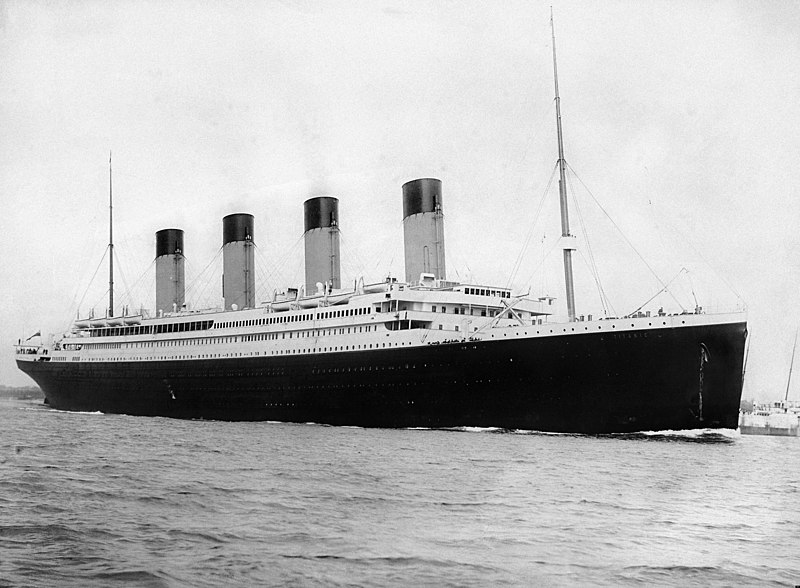
When the "unsinkable" ship, the largest, most luxurious ocean liner of its time, crashed into an iceberg on its maiden voyage in 1912, it took more than 1,500 of its 2,200 passengers to the bottom. As the ship slipped into the North Atlantic, so, too, did the secret of how and why it sank.
Investigations conducted immediately after the disaster agreed it was the iceberg, not any weakness in the ship itself, that caused the Titanic to sink. Both inquiries concluded the vessel had gone to the bottom intact. But lingering questions about what might have sunk the seemingly indestructible ship never completely disappeared. In 1985, when oceanographer Robert Ballard, after years of searching, finally located the ship's remains 2.5 miles down on the ocean bottom, he discovered that it had, in fact, broken in two on the surface before sinking.
A few years after Ballard discovered the wreck, the first pieces of the ship were brought to the surface, raising even more eyebrows when they seemed to offer physical evidence that low-quality steel might have caused the disaster.
Jennifer Hooper McCarty, a materials scientist at Oregon Health and Science University, and Tim Foecke, a scientist at the National Institute of Standards and Technology, make the case that it wasn't the ship's steel that was weak; it was the rivets, the all-important metal pins that held the steel hull plates together. When the Titanic hit the iceberg, McCarty and Foecke say, the weaker iron rivets in the bow popped, opening seams in the hull—and hurrying the ship's demise.
There were more than 3 million rivets holding the ship together. McCarty and Foecke began examining 48 rivets brought up from the wreck and found they contained high concentrations of "slag," a residue of smelting that can make metal fracture prone.